
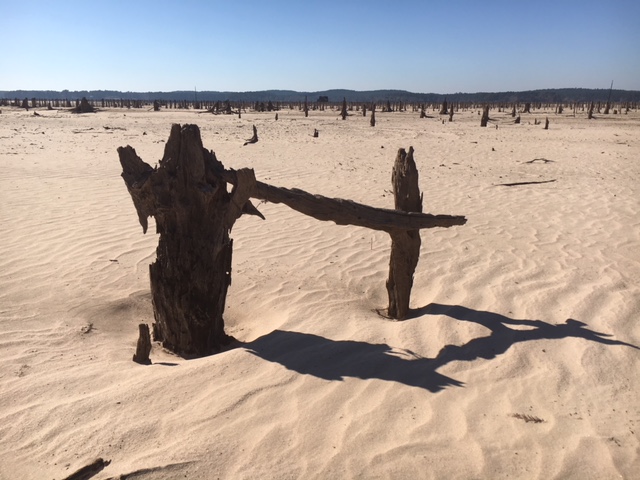
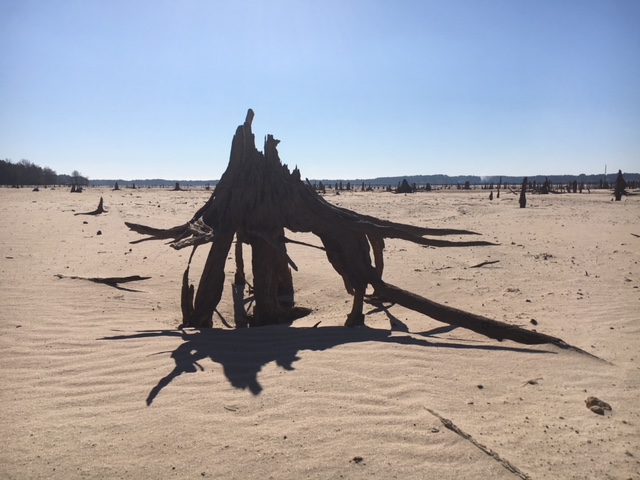
Epiphany is a big day in Louisiana. It’s the official start of Mardi Gras season, and parties abound. But this year, I spent Epiphany walking the surreal landscape of drained Vernon Lake in west-central Louisiana.
The lake was drained in late 2017 to examine damage that may have been caused by Hurricane Harvey. I was there with archaeologists Johnny Guy, president of the West Louisiana Archaeology Club; Dr. Joseph B. Mountjoy of Universidad de Guadalajara (Mexico); and his son, Nate Mountjoy, principal investigator, staff archaeologist, and field director with Prentice Thomas & Associates, Inc., the company contracted to investigate historical and archaeological sites on and around nearby Fort Polk.

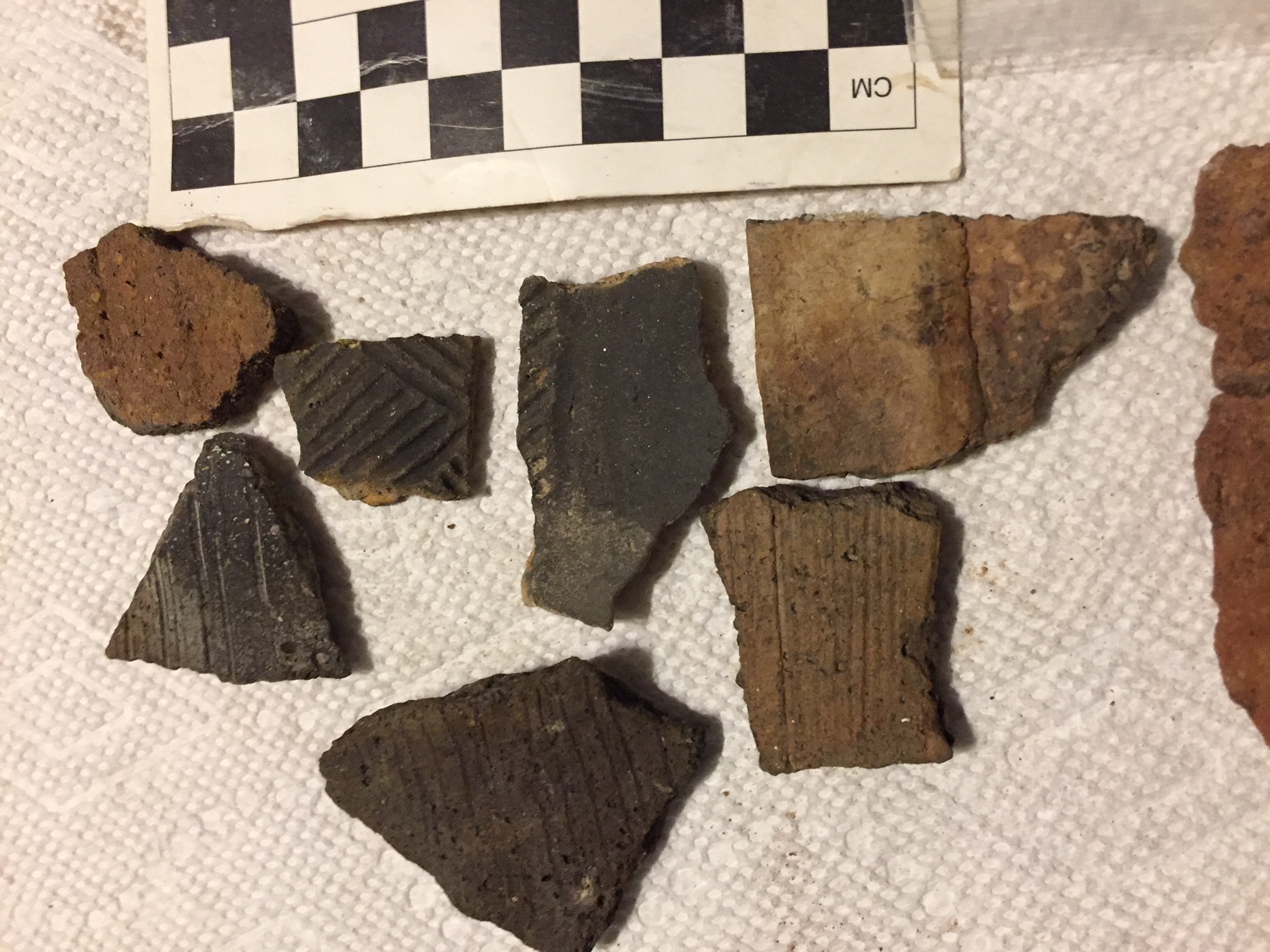
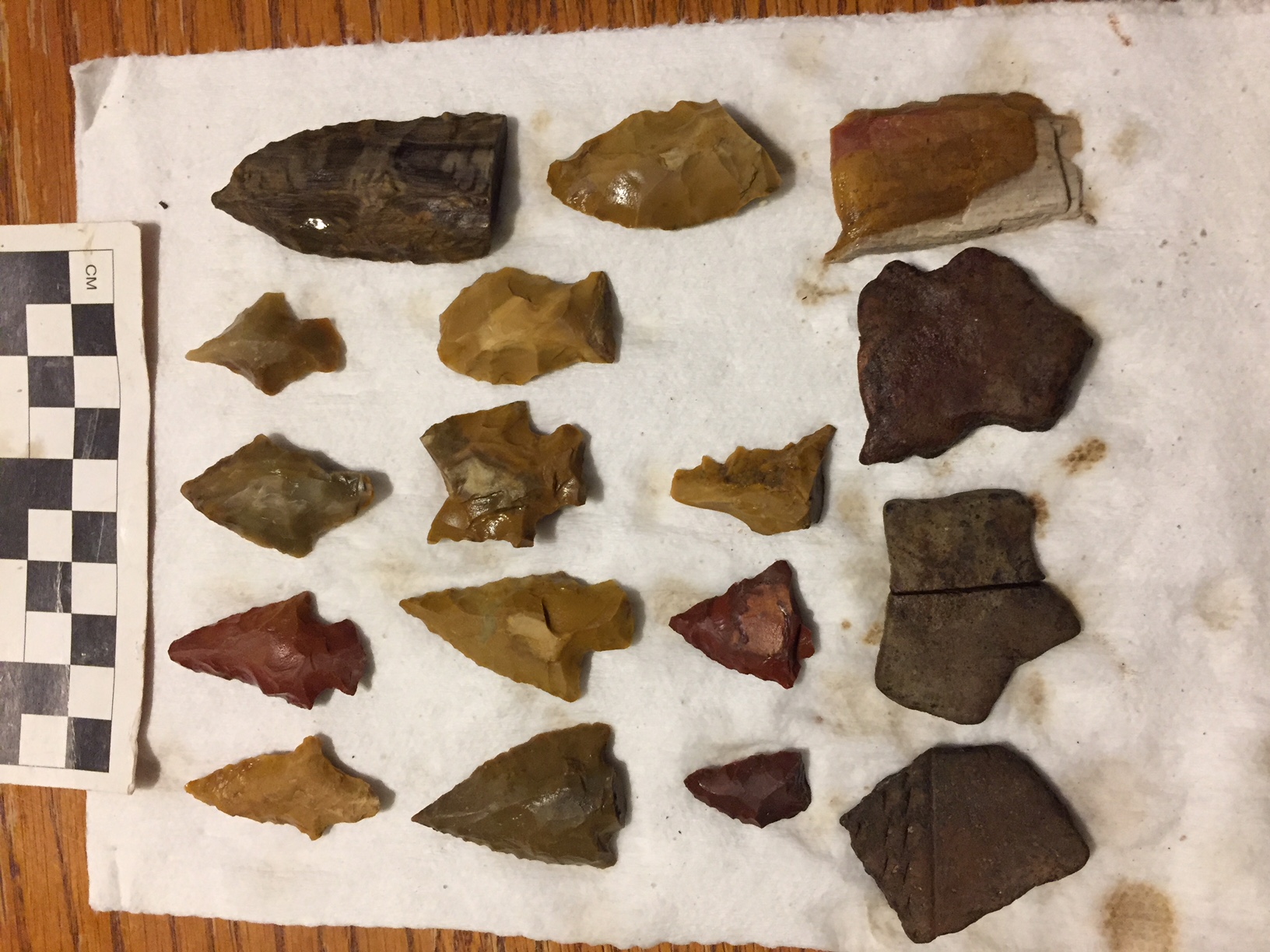
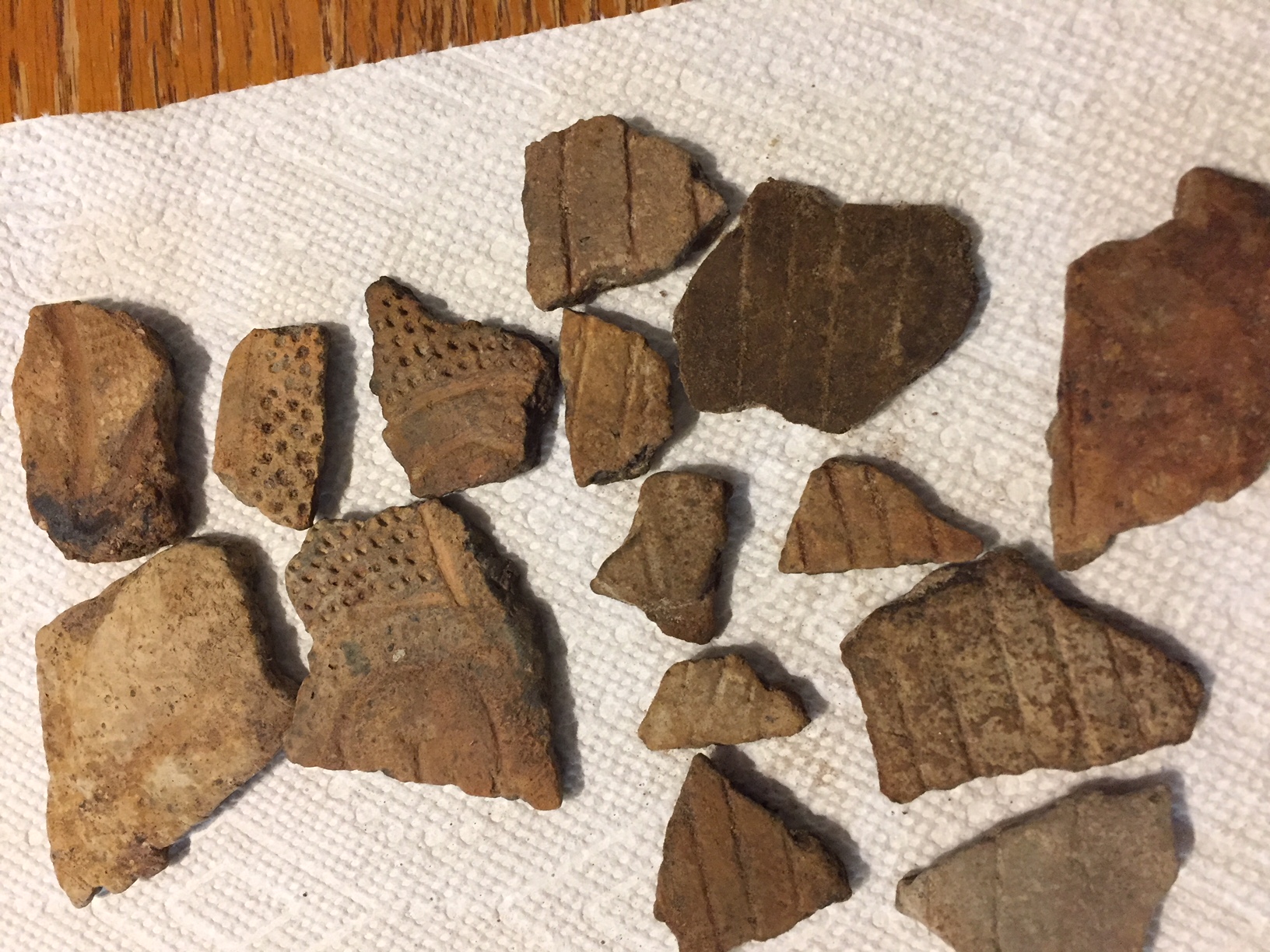
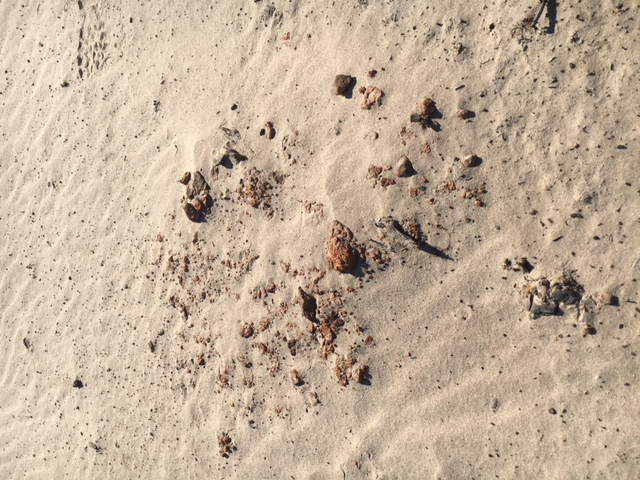
Guy had visited the site several weeks earlier to locate areas of interest, and right away, he found pottery sherds, arrowheads, pieces of stone tools, and burnt clay that indicated areas where a fire had been built thousands of years before a dam was built at Anacoco Creek to create the lake in 1963.
This day, Nate Mountjoy brought the Schonstedt Magnetic Locator to test the “hearth” areas that Guy had found. The locator, a long yellow pole with a small monitor near the handle, is similar to a metal detector, and its eerie hum contributed to the science fiction atmosphere of the drained lake. While two of the sites showed potential, a third had been too damaged by someone doing “donuts” in a four-wheeler – a real problem for the archaeologists who are investigating this site. Looters are also a problem, as the word is out that the lake has been drained. It is against state law to trespass or loot on the property, but that doesn’t stop people from trying.
While working on another Louisiana archaeology story for the print issue of First American Art Magazine, I learned that the best archaeologists are able to see things the untrained eye passes over. In that way, they remind me of artists, who are able to detect meaning, pattern, and beauty in what seems mundane. I got another example of that vision walking the lake with these three, who could spot the difference between a tiny flake leftover from making an arrowhead and the million little flakes of rock, shell, and bone that were all over the ground.
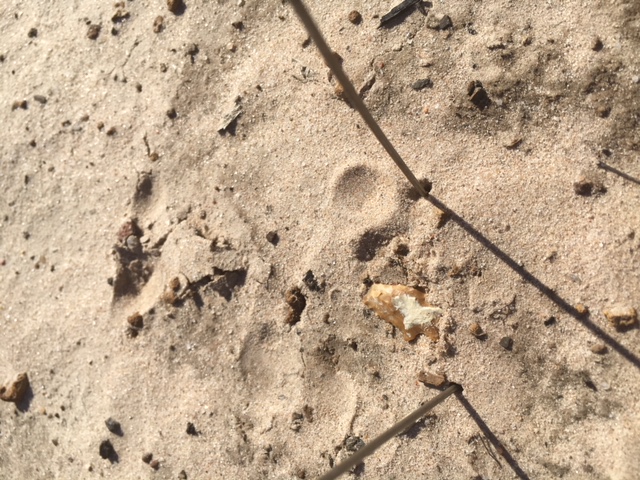
Also like artists, archaeologists recognize the skill that goes into the creation of the ancient artifacts they find. A small arrowhead we found on this trip was photographed and documented, discussed and handled with great interest even though all agreed it was the most common type of arrowhead found in the area. As we passed it around, Guy marveled at how long ago it was that anyone had seen it – and I’ve noticed that about archaeologists too: They don’t seem to lose their sense of awed respect for the people who created the artifacts they find, even when they have been doing their job for many years.
Archaeological history shows that it hasn’t always been that way, and of course not every archaeologist is the same. But perhaps greater involvement by tribal nations, laws like the 1990 Native American Graves Protection and Repatriation Act (NAGPRA), and a different type of archaeological education and mentorship has led to a change in attitude.
Guy speculates that some of the artifacts he has found at the bottom of Vernon Lake are from as far back as the Clovis period, which occurred around 13,500 years ago. The tools, arrowheads, and pottery sherds will be analyzed in the coming months, but Nate Mountjoy says there is enough evidence of intact sites to begin the process of protecting them from further industrial development once the lake is filled again. In the meantime, Guy has planned more excursions to find sites and document them before looters take artifacts or joyriders destroy them.
Like many archaeological sites, those at Vernon Lake are small, but the lives of the people who created the artifacts were full and important. As we walked back across the lake to our trucks, the archaeologists discussed what might be found later, as well as other sites they had visited. As a Mvskoke citizen, I hope the archaeologists who investigate my own ancestors’ sites speak of them – and treat them – with as much respect.
Joseph Mountjoy expressed concern about the current administration’s removal of federal protection for sites like Bears Ears and Grand Staircase. He said it is important that we learn what we can while we can. In Louisiana, where even recently state parks have closed, that means archaeologists work with the funding they have to learn all they can about the people who came before them. These trips to the bottom of Vernon Lake are part of that.
4 Comments
Thanks for your help.
A friend of mine found an arrowhead while deer hunting near Turkey Creek. It was the most beautiful point I have ever seen I mounted on a wooden dowel and added some feathers from a black crow roadkill. Would you like a picture if it?
Claude Ledet – 337-344-6527
I used to go there back in the 90s.. It was one of the best places to go and find arrowheads. We would keep an eye on the lake,and when it was finally “solid” enough to walk on,we would go every day,if possible. I miss looking for arrowheads,even if you didnt find anything, it was a great outing. My son found his first point there,at age 8. It was like walking around on a planet in a far away land…Had some great times…
I’m a retired Veteran and used to fish there. Some my best days was on that lake. I never knew why they drained it. Initially they said,” to do repairs” thank you for this article.