Close Menu
    Facebook Instagram LinkedIn
    • Subscribe
    • Advertise
    • Contact Us
    Indigenous art. Indigenous perspectives.
    Facebook Instagram LinkedIn Pinterest
    First American Art Magazine
    • Home
    • About Us
      • Press
      • Distribution
      • Sponsors
      • Contact Us
      • Refund and Returns Policy
    • Current Issue
    • Past Issues
      • Archives
      • FAAM Index
    • Content
      • Articles
      • Blog
      • Reference
        • Acronyms
        • Art Terms
        • Artist and Scholar List: A–F
        • Museums, Galleries, and Other Art Venues
        • Timeline of Indigenous Art History of the Americas
    • Calendar
      • Submit an Event
    • Submissions
      • FAAM Style Guide
    • Advertise
    • Subscribe
      • Magazine
      • Monthly Newsletter
    0 Shopping Cart
    First American Art Magazine
    Home»Web Content»Blog»Cultural appropriation at the Tate?

    Cultural appropriation at the Tate?

    1
    By Stacy Pratt on April 20, 2018 Blog, Web Content
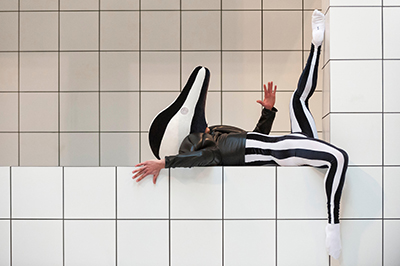
    Anthea Hamilton, Squash, 2018, performance and installation, Tate Britain. Photo: Stephen Chung / Alamy Live News. ©2018, used with permission

    LONDON, U.K.—Is cultural appropriation ever an accident? What about cultural appropriation of cultural appropriation? These are some of the questions brought up by British artist Anthea Hamilton’s installation The Squash, currently at Tate Britain.

    The Squash involves a wandering model dressed in a variety of costumes which include squash-like headpieces. Originally, the Tate’s website stated that Hamilton was inspired by a photograph of a person dressed as a vegetable lying among vines, but she did not remember where she had seen this photograph. Hamilton told Vogue, “The starting point of the work is a found image I’ve had for many years. It shows a person dressed in a costume like a squash, pumpkin, or gourd. I no longer have the caption for it, so cannot trace it. It’s a wonderful mystery. I don’t know what the purpose of that image was, so the only way to get to know more about it was to try and make my own version of it.”

    When Joanne Prince, owner of Rainmaker Gallery in Bristol, saw pictures of The Squash costumes, however, they looked awfully familiar. She posted the photograph on her Facebook page with the caption, “Looks like a Hopi melon head to me!” She wasn’t the only one who thought so. (“Melon head” is one term for squash katsina, also known as “Squash Kachina” or “Patung.”)

    “I first saw the image on the front page of The Guardian newspaper and was surprised that a Hopi figure was featured so prominently on a national newspaper,” says Prince. “I read on and was dismayed that the artist was firstly not Native and secondly had replicated an image whilst completely forgetting its attribution.”

    Prince tagged several Native artists in her post, including Diné-Chicana painter and muralist Nani Chacon, who called for people to write to the Tate. Prince says, “I wanted the issue to be raised directly by Native people as their concerns would have more impact.”
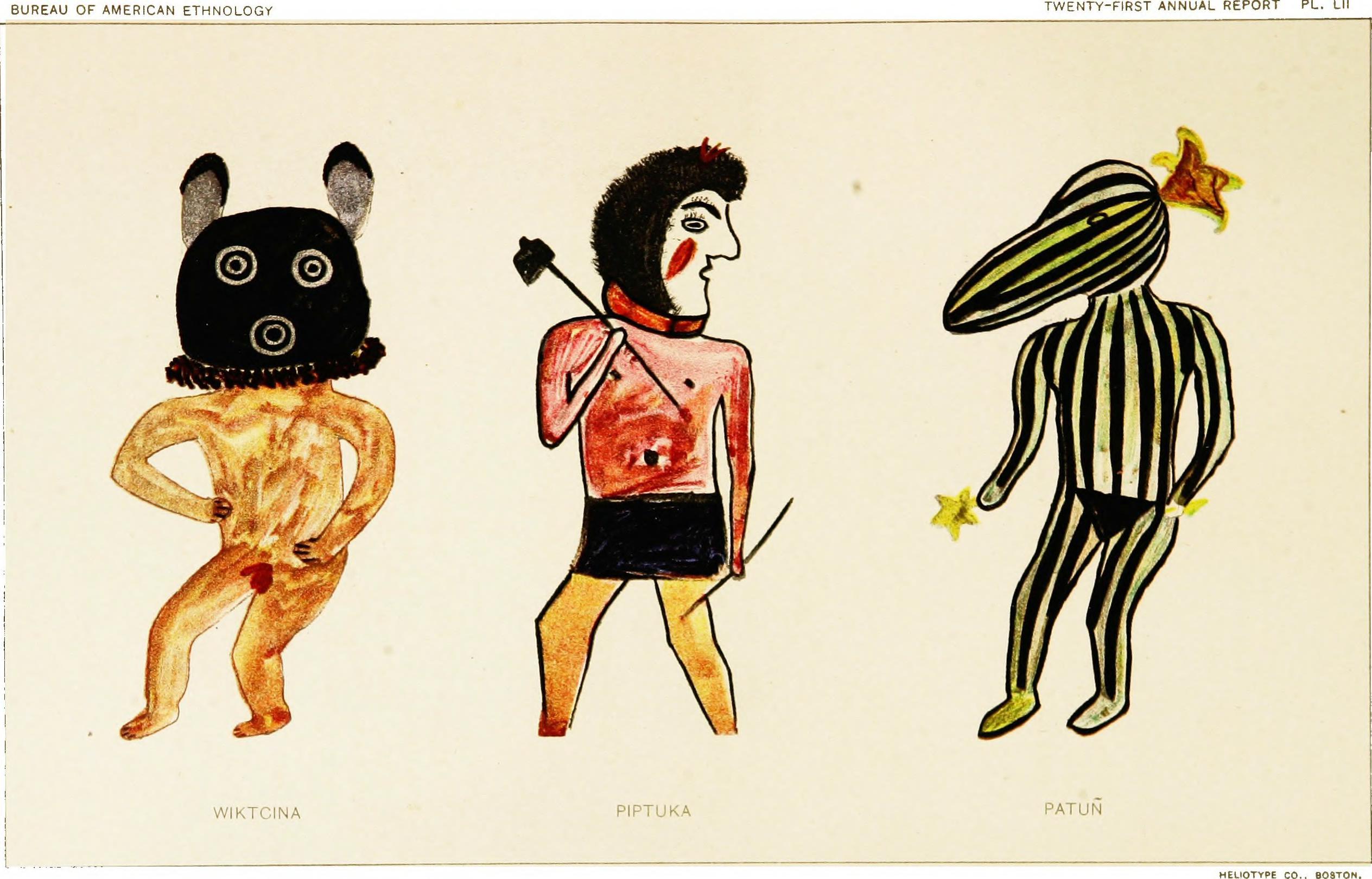
    Three Hopi Katsinam, including a Patung (Squash Katsina) on the right, from Hopi Katchinas Drawn by Native Artists (Bureau of American Ethnology, 1892).

    Chacon, along with other artists and curators, contacted the Tate, and on April 4, Prince noticed that the museum had changed the wording on its website, which now reads as follows:

    “Each element of The Squash has evolved from Hamilton’s interest in a photograph she found in a book several years ago when looking at improvisational theatre and participatory art practices in the 1960s and 1970s. It showed a person dressed as what looks like a vegetable lying among vines. The original photograph dated from 1960 and depicted a scene from a dance by American choreographer Erick Hawkins. Hawkins was interested in Native American philosophies and he took the form of this costume from the Squash Kachina of the Hopi culture.”

    Prince said the addition helps but could go further. “I am glad that some reference to origin has now been added, but I do not think that it is enough,” she says. “This high profile instance is not merely inspiration but replication.”

    Hamilton has not made a statement about the change, but presumably, she now remembers where she found the image. Interestingly, it turns out that her appropriation was inspired by another artist’s casual cultural appropriation. Does that make her less guilty? In the age of Google image search, probably not. But it does highlight the ongoing challenges that occur when imagery and symbolism are taken out of context by people outside Indigenous communities.


    Related Posts

    Launch Party 49 | First American Art Magazine Celebrates Issue No. 49

    January 26, 2026

    Edmonia Lewis: Said in Stone at the Peabody Essex Museum

    January 8, 2026

    Meet FAAM’s New Operations Manager, Jessica Ma’ilo

    December 22, 2025

    1 Comment

    1. Li on July 23, 2018 6:36 am

      I’m glad this article was written. I was so alarmed with the Squash exhibition first hit, alarmed that not many people were calling it out as an exact replica of Patung Kachina

      Reply
    Leave A Reply Cancel Reply

    Woven in Wool, Burke Museum
    Water's Edge: The Art of Truman Lowe. Now Open. NMAI, Washington, DC
    Ancestral Edge at the Ringling Museum
    Sign up for FAAM Art Beat newsletter
    Sign up for FAAM Art Beat newsletter
    Cherokee Language Publishing
    Indigenous Editors Association
    Indigenous Editors Association
    Mission Statement

    First American Art Magazine, LLC (FAAM), broadens understanding of art by Indigenous peoples of the Americas from tribal communities to the global art world.

    Subscribe to FAAM Art Beat, our free monthly newsletter

    Vision Statement

    First American Art Magazine, LLC, strives to foster historical resilience, cross-cultural understanding, and reintegration of humans into the natural world.

    turtleshell rattle by Tommy Wildcat

    First American Art Magazine's offices are located within the ancestral homelands of the Wichita and Affiliated Tribes and the historic territories of the Muscogee Nation and the Seminole Nation of Oklahoma.

    Contact Us

    First American Art Magazine
    3334 W. Main St. #442
    Norman, OK 73072
    (405) 561-7655

    info@firstamerican.art
    ads@firstamerican.art
    circulation@firstamerican.art

    Site Admin

    © 2026 First American Art Magazine, LLC. All rights reserved.

    Type above and press Enter to search. Press Esc to cancel.