

Indigenous people have always danced, but they weren’t associated with ballet until the 1940s when Osage ballerina Maria Tallchief rose to prominence as America’s first prima ballerina when famed choreographer George Balanchine formed the New York City Ballet. Tallchief and her sister Marjorie (Osage), along with Yvonne Chouteau (Shawnee Tribe), Rosella Hightower (Choctaw), Moscelyne Larkin (Peoria-Eastern Shawnee-Russian) were known as the Five Moons. Quapaw-Cherokee composer Louis Ballard created The Four Moons ballet with solo dances in honor of each of the ballerinas’ heritages.
Since then, many Indigenous dancers have studied ballet, including Navajo/Puerto Rican dancer Jock Soto, who had a long career as principal dancer with the New York City ballet, giving his final performance there in 2005. Many were honored to witness his collaboration with Metis dancer Rulan Tangen and White Mountain Apache violinist Laura Ortman at the opening of the IM: EDGE exhibition at last year’s Santa Fe Indian Market. (Tangen is the founder of Dancing Earth, an Indigenous contemporary dance company which was featured in the December 2017 issue of Dance Magazine for their role as co-founders of the 500 Years of Resistance Festival.)
A lot is going on in the world of Indigenous ballet, but here are some highlights and ways you might get involved.

1. West Australia Ballet partners with Larrakia choreographer for a dance based on a Yolgnu story.
On Feb. 9, 2018, Milnjiya, Milky Way: River of Stars by Gary Lang and NT (Northern Territories) Dance Company for West Australia Ballet premiered at the Quarry Amphitheatre in Perth. Lang is a Larrakia dancer and choreographer. In an interview on the West Australia Ballet Facebook page, he says, “This piece is about giving permission for spirit to leave this world.” It is based on a Yolgnu story about the origin of the Milky Way. The piece combines Indigenous musicians and dancers, classical ballet, and operatic singing by Yorta Yorta soprano Deborah Cheetham.
At right is a photograph of Milnjiya, Milky Way – River of Stars featuring Matthew Lehmann, WAB Principal Dancer; Deborah Cheetham, Yorta Yorta Soprano; Michele Dott, NT Dance Company; Darren Edwards, NT Dance Company; and Ana Gallardo Lobaina, WAB Corps de Ballet Dancer.

2. Colorado Ballet collaborates with Lakota dancer/choreographer for Moccasins En Pointe.
Lakota fancy shawl dancer Keya Clairmont collaborated with the Colorado Ballet and the Manderee singers for Moccasins En Pointe, which premiered February 3, 2018, at the Armstrong Center for Dance in Denver. The piece was part of Colorado Ballet’s New Cultural Works project, funded by Bonfils-Stanton Foundation.
In a Facebook post the night after the premiere, Clairmont wrote, “The ballerinas were open-minded and willing to listen and learn what I had to say about, not only the Fancy Shawl style of dance but who I am as a person. If you dance at powwows, then you know about the connection with the songs and the drum as well as the good feeling in the dance arena. It is a part of your inner being. That feeling is something that cannot be taught. Our conversations about dance made a natural collaboration on its own.”
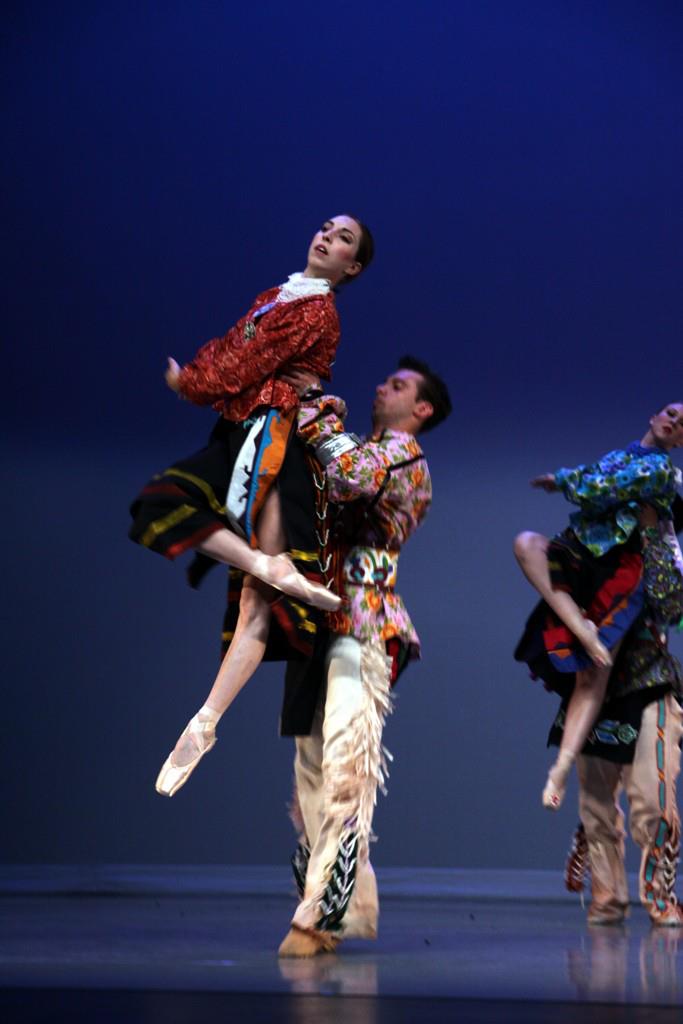
3. Osage Ballet prepares for a spring performance of Wahzhazhe: An Osage Ballet.
Wahzhazhe: An Osage Ballet was produced by Randy Tinker-Smith and choreographed by her daughter, Jenna Smith, both of Osage-Cherokee heritage. The ballet tells the history of the Osage Nation through ballet. The music was composed by Joseph Rivers and Lou Brock (Osage), and the original costumes were designed by Wendy Ponca (Osage). The ballet has been performed across the country, including during Pope Francis’s 2015 visit to the United States. On April 5, 2018, Wahzhazhe will be performed at the City of Stillwater Community Center in Stillwater, Oklahoma, as part of the Stillwater Public Library’s One Book, One Community reading series which focuses this spring on Killers of the Flower Moon: The Osage Murders and the Birth of the FBI by David Grann.
4. Cherokee dance group raising money to take their version of Four Moons to Washington, D.C.

Encore! Performing Society is based in Tahlequah, OK, the capital of the Cherokee Nation. Most of the youth dance company’s dancers are of Cherokee heritage, and in 2016 they performed their interpretation of Louis Ballard’s Four Moons, a dance composed in honor of the Five Indian Ballerinas of Oklahoma, as part of the Cherokee National Holiday. Now, the production has been selected for performance at the Smithsonian Museum of the American Indian in Washington, D.C. The group has begun fundraising, including a YouCaring site where people can donate online to help with travel expenses for the twelve dancers.
5. Friends of injured Inuk ballet dancer continue to raise money to aid his recovery.
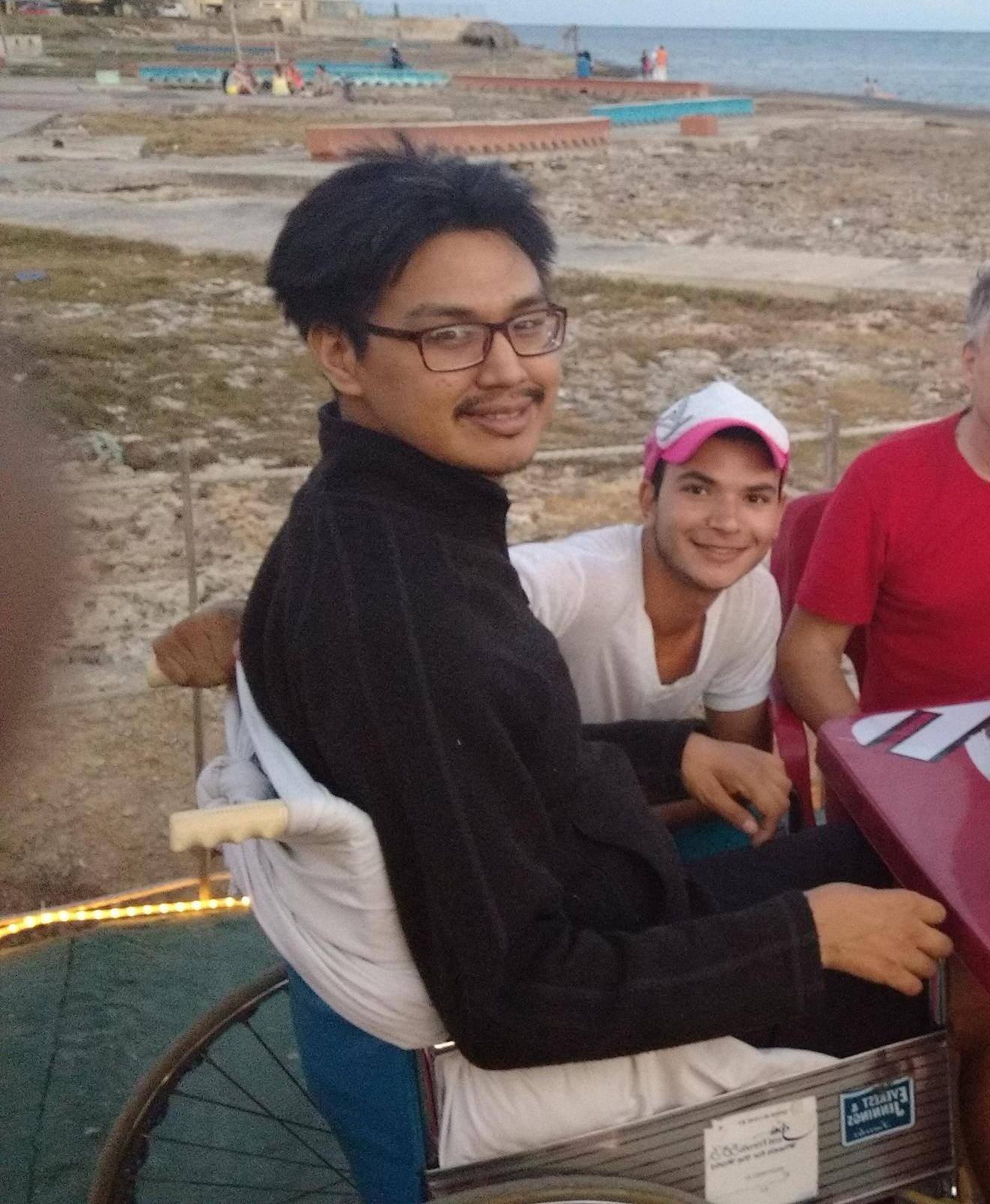
Napu Boychuk of Yellowknife, Northwest Territories was set to become world’s first Inuk ballet dancer when a 2015 swimming accident in Cuba resulted in extensive paralysis. Boychuk and his family chose to stay in Cuba for his ongoing recovery and rehabilitation, and his sister Tuutalik has set up a Gofundme to assist them. People from all over Canada and around the world have contributed, including the esteemed Canadian author Margaret Atwood, best known for The Handmaid’s Tale.
4 Comments
THANK YOU SO MUCH! 🙂 I hope that you’re able to get there soon, as well!
Dancing one of ways to see other culture of a country
are there other native american ballet dancers
Yes! Jock Soto (Navajo) is an amazing ballet dancer who now teaches at the School of the American Ballet in New York. The majority of the dancers at the Encore! Performing Society are members of the Cherokee Nation. Ji Hai Pappan (Jemez Pueblo/Kaw/Osage) is an emerging ballet dancer. The Colorado Ballet collaborated with Native fancy shawl dancers to create Moccasins en Pointe.