
MUSKOGEE, OKLA. – Choctaw-Chickasaw artist Norma Howard’s watercolor Kanima School took Best of Show at the Five Civilized Tribes Museum Masters Art Show on Nov. 3. The Masters Show features work by artists distinguished by the museum’s Master Artist classification, which began in 1973.
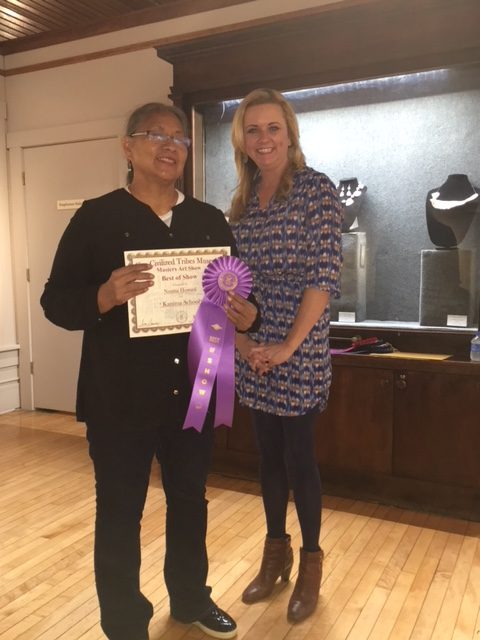
Kanima School, which depicts cheerful young students in a historic classroom setting, is based on memories of her own time as a student at the eastern Oklahoma elementary school.
“Kanima School is the little school that I went to,” she said. “There were just three of us in the class. The little room was first, second, third, and fourth, and then the big room was fifth, sixth, seventh, and eighth. That was my brothers and sisters’ classes. It was a good school, where everybody knew each other and we were all Choctaw kids.”
She said memories of that time helped her conceive the painting after its initial inspiration.
“I had a vision of a little bitty Choctaw girl smiling,” she said. “It was the middle of the night, and I woke up, and I thought, ‘Why did that little girl come in my dream?’ And I said, ‘There’s a meaning to it.’ With us artists, anything that comes to us, there’s a reason. So I decided to put [her with her classmates]in a classroom where they’re looking at their teacher, like it’s the first day of school. That was one of the best times of my life. When I went to a public school later, that’s when I was traumatized. There were no Choctaw kids going there, and there were like 22 in the class. That was a big class to me.”
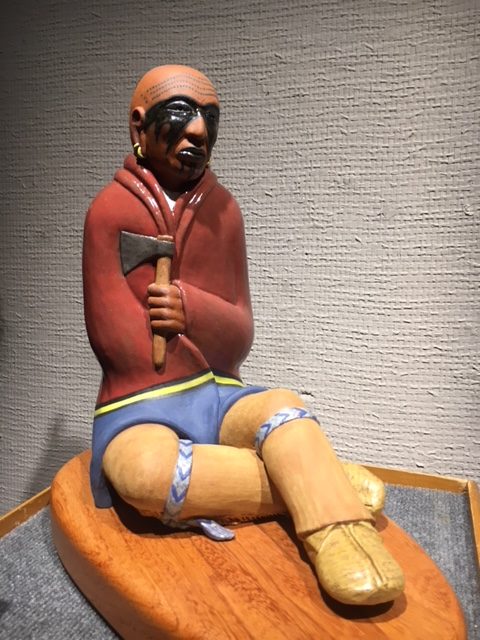
Cherokee sculptor/ceramicist Bill Glass Jr. won the Indian Heritage Award for his clay figure, He Would Not March.
“I read that when the Georgia militia would come up to take [Cherokee people] to the forts, some of the men would send their wives and kids on, but they would not go,” he said. “They would refuse. They gave them two weeks to leave, then they’d come back and the mother and children would be packed up to leave, but the men would be sitting on the porch. When they found them there, they would kill them right there on the spot. That was the idea behind my piece. They would not march.”
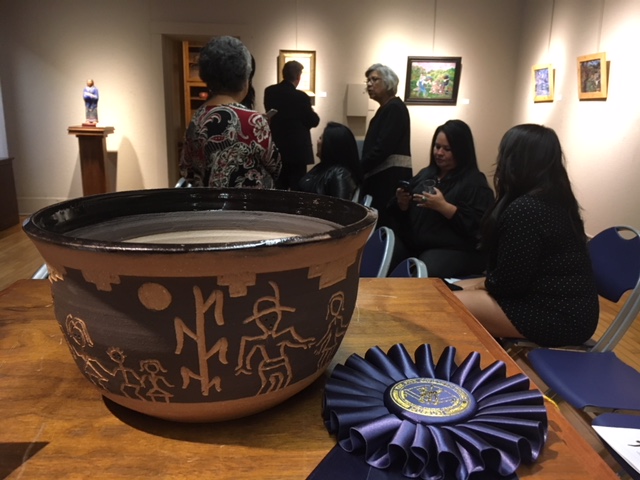
Spirit of Oklahoma Award winners were Seminole-Muscogee Creek-Cherokee potter Mike Daniel for Green Corn and Muscogee Creek sisters Jimmie Carole Fife for her gouache painting Seminole Woman and Sandy Fife Wilson for her woven sash, Opothle Yahola Sash Variation.
2018 marks Daniel’s first appearance as a Master Artist.
“I mixed up the ancient mound corn dancers with modern day dancers, with their changes. I put the mounds in the back, and it’s done in a pictograph manner, but you can see the contemporary in it too. But this is the time for Green Corn, and I always try to do a piece for Green Corn…a new beginning, a new birth, a time to start over, and a time for forgiveness. That’s the reason I did it.”
Daniel’s pottery will be among the artwork shown at an upcoming show in Tahlequah, Okla. at Echota House Gallery Nov. 16-18 and 23-25.
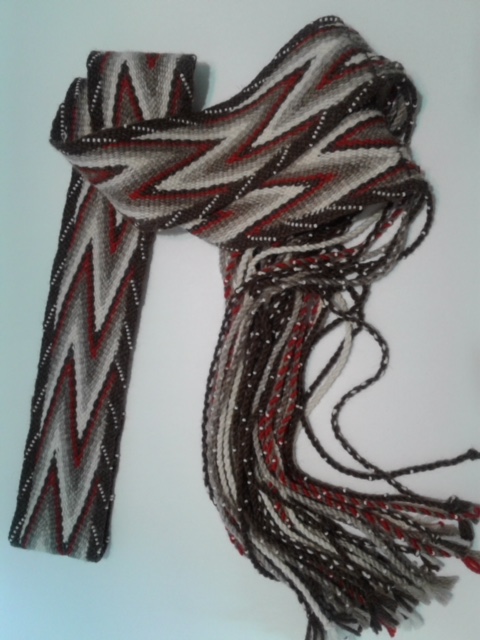
Sandy Fife Wilson’s sash was based on the belongings of 19th century Muscogee Creek chief Opothle Yahola.
“The main part of the design, the one-and-half-chevron design, is taken from a sash or bag that Opothle Yahola wore, but I changed the number of colors and added a wider band on the outside edges, and I added beads to it,” she said.
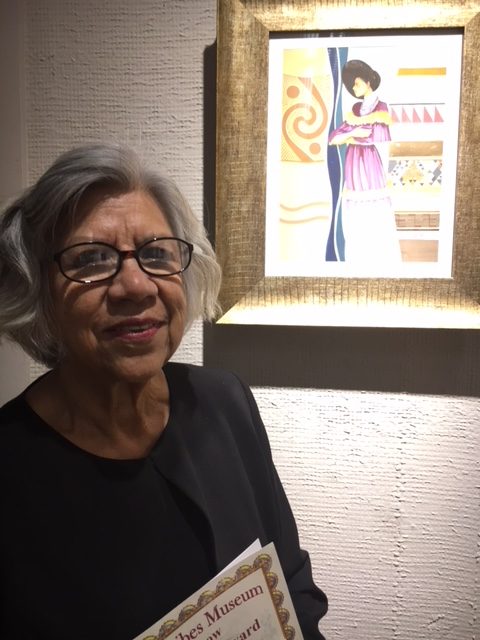
Jimmie Carole Fife said the inspiration for her painting came from a memory that felt like a dream.

“When I was older, I told my aunt that when I was a little girl I dreamed I saw this woman at church who had on a long colorful dress, and she had on a black hat and lots of beads around her neck,” said Fife. “My aunt said, ‘No. You didn’t dream it. This woman from Florida came to visit our church.’ So then I started looking up women from Florida, and for the background I used some of the Seminole designs and patchwork designs.”
Norma Howard will be profiled in the upcoming FAAM issue #21, which will be on newsstands later in November. Sandy Fife Wilson was profiled in FAAM issue #19. Both issues can be ordered on the FAAM website.