
Imagine viewing an ancestral object overlaid with incised design work that carries stories still relevant to the present-day peoples from which it was made. What do you see? The materials it is made from? The way the designs are laid out? What if you could see a story?
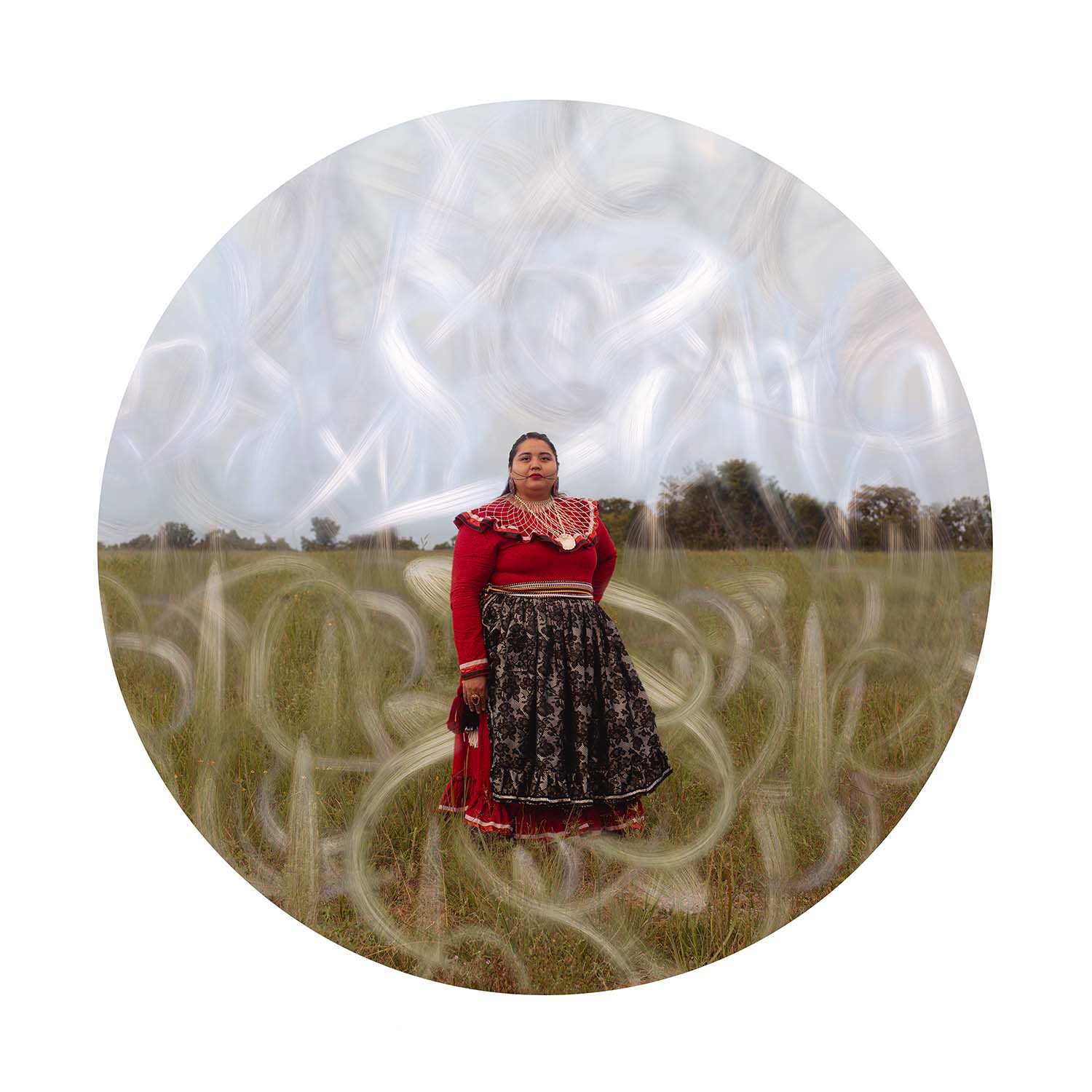
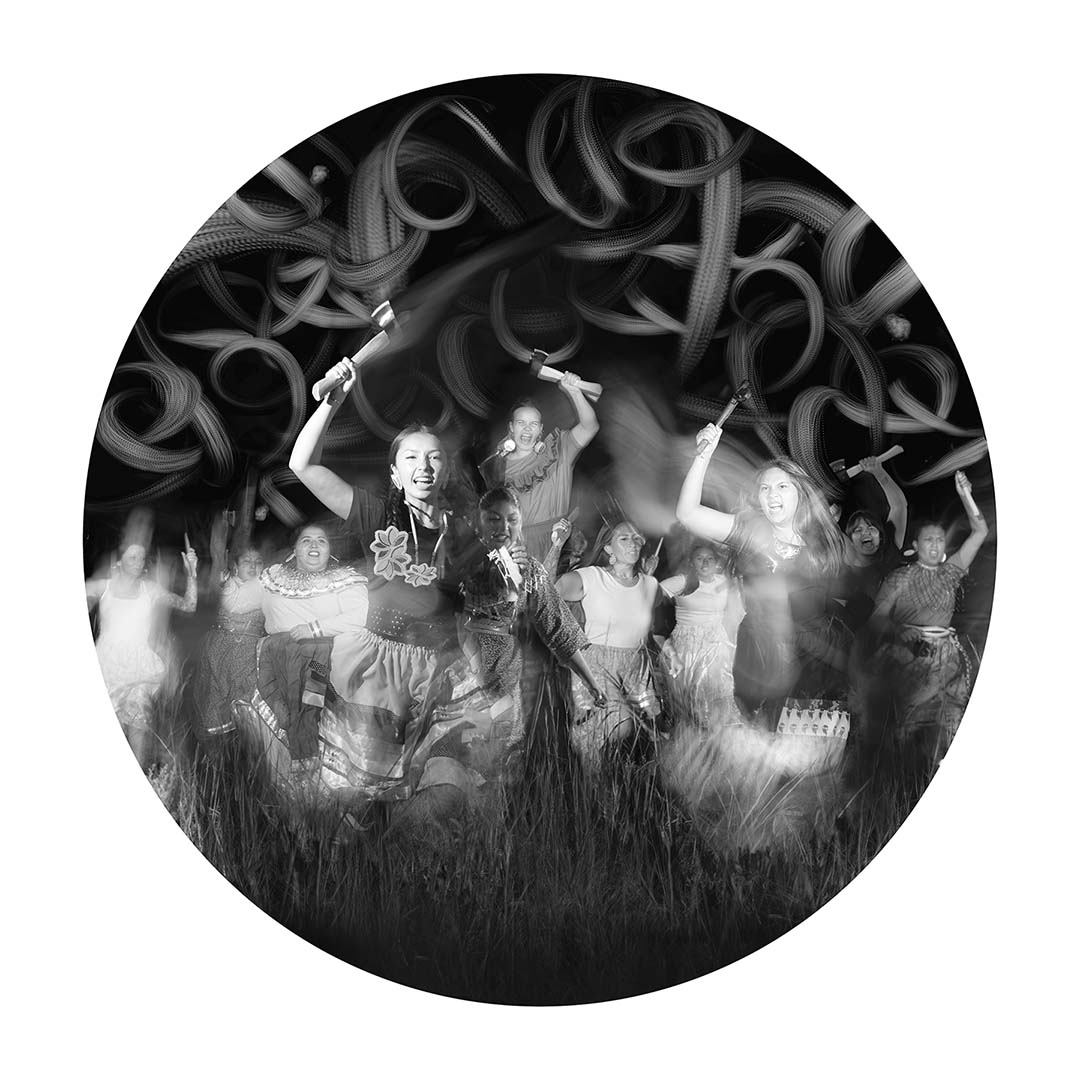
That’s what photographer Destiny J. Green (Chickasaw) sees when she looks at Southeastern Indigenous objects of cultural relevance, specifically Chickasaw gorgets. Green visually intertwines the original design elements of the objects themselves and the stories they represent. Two pieces of Green’s photography exhibit this artistic technique, Faithlyn (2024) and Aahíkki’ya Ano̱wa: Chikasha Ihoo Oksifoshi’at Okcha̱at Billi’ya’/ Aahíkki’ya Again: Chickasaw Hatchet Women Live Forever (2024).
Visually, both photographs are based on the information, imagery, and stories found in gorgets, which are decorative accessories of cultural and symbolic significance typically made with clay, freshwater shell, or copper and worn tied onto the body with a leather thong. Focusing on the elements of the designs referenced, Green frames each visual story by mimicking the circular style of many of the gorgets. Side by side, commonalities in the photographs are apparent through a shared horizon line, centralized subject matter, and the forward-looking perspective of the figures themselves. The audience is meant to be face-to-face with the people, place, and story. The placement of the viewer is presented as if they themselves are actively in the image of the photograph.
Through historical and cultural context of the figures, the manner of their dress, and the titles of the photography, further information can be gleaned. Green portrays the quintessential Chickasaw woman through Faithlyn (2024); Wearing the clothing and tattoos of her people, she exudes calm and poise with an aura of strength and resilience while portraying as a leader, a tribal citizen, and the individual person that she is on her own.
In opposition to the calm and poised nature of Faithlyn, but still with the strength and resilience that epitomizes Chickasaw women, Aahíkki’ya Ano̱wa: Chikasha Ihoo Oksifoshi’at Okcha̱at Billi’ya’/Aahíkki’ya Again: Chickasaw Hatchet Women Live Forever (2024) reveals the tremendous vigor of responsibility, loyalty, and preservation Chickasaw women met in times of need.
Fighting off the French colonialists with hatchets in hand combined with powerful singing voices, the “Hatchet Women” (as they are admirably known) forced all but the French officers back from taking over their village. In both photographed images, swirls of light writing mimic the movement of Chickasaw written words as if carrying the voices of all Chickasaw people with them through both visual stories.
Green’s work juxtaposes the ancient and the modern, while highlighting for the viewer the visual, emotional, and cultural commonalities between the two. The depth and detail that Green goes to in order to express the lived stories of Chickasaw and Southeastern Indigeneity within her photography reinforces the idea that these ancestral designs and stories are just as important and relevant in today’s world as they were in that of our ancestors.
Artist Biography
Destiny J. Green is a Chickasha, US-based artist specializing in photography that illustrates transitional space, temporal distance, states of paramnesia, and the uncanny, utilizing light and digital media manipulation. Green is the mother of two amazing children and a proud citizen of the Chickasaw Nation.