

The US Department of the Interior (DOI) announced the final rule for implementing the Native American Graves Protection and Repatriation Act (NAGPRA) in December 2023. The revision should streamline processes and ultimately speed up the repatriation of remains and cultural items to tribes.
The updates to NAGPRA include:
- “Strengthening the authority and role of Tribes and Native Hawaiian Organizations (NHOs) in the repatriation process by requiring deference to the Indigenous Knowledge of lineal descendants, Tribes, and NHOs.
- “Requiring museums and federal agencies to obtain free, prior, and informed consent from lineal descendants, Tribes, or NHOs before allowing any exhibition of, access to, or research on human remains or cultural items.
- “Eliminating the category “culturally unidentifiable human remains” and resetting the requirements for cultural affiliation to better align the regulations with congressional intent.
- “Increasing transparency and reporting of holdings or collections and shedding light on collections currently unreported under the existing regulation.
- “Requiring museums and federal agencies to consult and update inventories of human remains and associated funerary objects within five years of this final rule.” (USDOI)
Congress passed NAGPRA 33 years ago to prevent grave looting and push museums to return human remains and other items taken from Native American gravesites to tribes, last year ProPublica reported that many institutions have exploited loopholes in the law to avoid complying with it. According to federal data, these institutions “continue to store about half of the 200,000 ancestral remains they reported holding following passage of the 1990 law” (ProPublica).
Two particularly notable recent updates help to close these loopholes:
- Requiring institutions to obtain consent from lineal descendants before human remains or cultural items can be accessed or viewed
- Eliminating the category of “culturally unidentifiable human remains.” (USDOI)
In ProPublica’s Repatriation Project, they noted that thus far institutions – not tribes – have had the final say on whether their collections are culturally related to the tribes seeking repatriation. ProPublica also revealed: “Throughout the 1990s, institutions including the Ohio History Connection and the University of Tennessee, Knoxville, thwarted the repatriation process by categorizing everything in their collections that might be subject to the law as ‘culturally unidentifiable.’” (ProPublica)
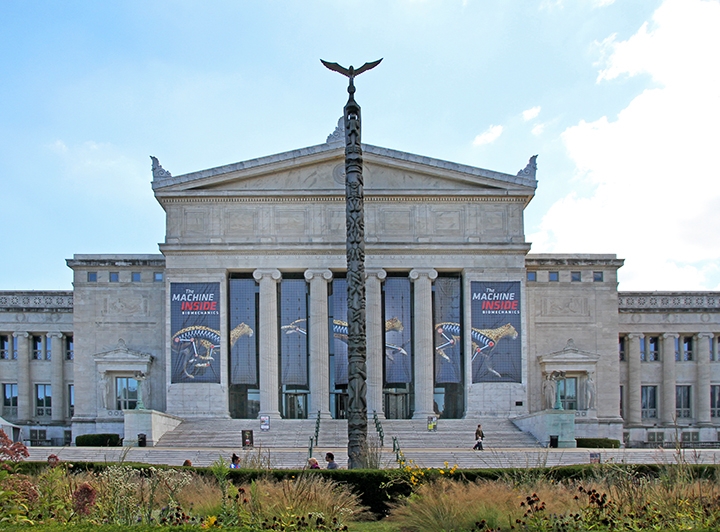
Responding to the final rule changes, Chicago’s Field Museum issued a press release on January 10, 2024, to alert visitors that they had covered several displays in the Robert R. McCormick Halls of the Ancient Americas and the Alsdorf Hall of Northwest Coast and Arctic Peoples. These contain culturally sensitive items from Native American communities throughout the United States. The museum notes that this was in direct response to the rule that requires “museums and federal agencies to obtain free, prior, and informed consent from lineal descendants, Tribes or NHOs before allowing any exhibition of, access to, or research on human remains or cultural items.”

Only a few days later, the Cleveland Museum of Art followed suit with News 5 Cleveland reporting that the institution had covered three out of six display cases in their Native North American Art gallery and is “currently reviewing archival records to determine if consent consistent with the regulations has been obtained and, in instances where there is no record of consent, determine which parties need to be consulted. The 30-day period between the time the new requirements were issued and when they went [into]effect did not provide adequate time to secure consent.”
In a press release about the final rule, US Department of the Interior Secretary Deb Haaland (Laguna/Jemez Pueblos) said: “The Native American Graves Protection and Repatriation Act is an essential tool for the safe return of sacred objects to the communities from which they were stolen. Among the updates we are implementing are critical steps to strengthen the authority and role of Indigenous communities in the repatriation process. Finalizing these changes is an important part of laying the groundwork for the healing of our people.”
According to ProPublica, the remains of more than 110,000 Native American, Native Hawaiian, and Alaska Native ancestors are still held by 623 museums, universities, and federal agencies. How institutions will comply with or avoid these new rules remains to be seen. (ProPublica)
1 Comment
Thank you for sharing this. Great information!