
Making the Most of Santa Fe Native Art Week 2026
Whether you call it Native Art Week, Indigenous Celebration, Indian Market Week or simply the busiest week of the year in Santa Fe, one thing is certain: there is nowhere else in the world quite like it.
Each August, thousands of artists, collectors, curators, gallery owners, museum professionals and art enthusiasts and advocates gather in Northern New Mexico for an extraordinary celebration of Indigenous art. Dozens of exhibitions, artist receptions, markets, demonstrations and cultural events unfold across the city, creating an unforgettable experience that can also feel overwhelming for first-time visitors.
Having attended Native Art Week as both artists and organizers, the FAAM team learned a few things along the way. These tips will help you navigate the week, spend your time wisely and enjoy everything Native Art Week has to offer.

You Can’t Do It All
The biggest mistake first-time visitors make is trying to attend every event on the calendar. It’s simply not possible.
Instead, decide what matters most to you before you arrive. Are you hoping to purchase artwork? Meet specific artists? Attend exhibition openings? Explore museums? Prioritize those experiences and allow room for unexpected discoveries.
Santa Fe is wonderfully walkable in some areas, but events are spread throughout the city. Group your plans by neighborhood whenever possible to minimize travel time.
Key districts include:
- Downtown Plaza | SantaFe.org – Home to SWAIA Santa Fe Indian Market, galleries, museums, and many receptions.
- Museum Hill | SantaFe.org – Several museums and special events, including the Wheelwright Museum Artists’ Market.
- Canyon Road | VisitCanyonRoad.com – Historic galleries and exhibition openings.
- The Railyard District | RailYardSantaFe.com – Contemporary galleries, restaurants and cultural events.
- Southside | SantaFe.com – Additional galleries, studios and local dining.
- North of Town | SantaFe.org – Destinations such as Buffalo Thunder Resort, the Poeh Cultural Center and other special exhibitions.
Plan for Long Days

You’ll spend far more time on your feet than you expect.
Wear comfortable walking shoes with good support. Historic sidewalks, brick streets and gravel pathways can be uneven. A lightweight backpack is helpful for carrying water, sunscreen, a portable phone charger and any purchases you make throughout the day.
New Mexico’s high-desert sun is intense, even when temperatures feel comfortable. Sunscreen, sunglasses and a wide-brimmed hat are highly recommended.
Respect the Altitude
At more than 7,000 feet above sea level, Santa Fe surprises many visitors.
Fatigue, headaches, and shortness of breath are common during the first day or two, particularly for those arriving from lower elevations. Stay well hydrated, take breaks throughout the day, and don’t underestimate how much more quickly alcohol can affect you at higher elevations.
Your body will thank you.
Dress in Layers
This week will be hot! But there’s a chance of rain every day.
Santa Fe’s dry climate can also be hard on visitors. Lip balm, moisturizer, and plenty of water go a long way toward keeping you comfortable throughout the week.
Make Restaurant Plans Early
Restaurants throughout downtown become exceptionally busy during Native Art Week.
If there’s a restaurant you’ve been hoping to visit, make reservations well in advance. For quicker meals or larger groups, consider dining outside the Plaza where wait times are often much shorter.
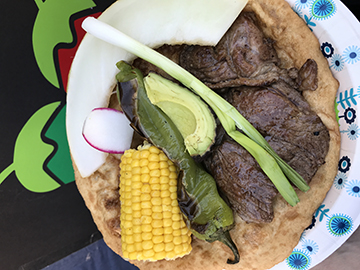
And if you’re sampling New Mexican cuisine for the first time, remember that “hot” chile usually means exactly that. Try sour cream or milk to neutralize the acids in the peppers.
Understand the Markets
Several major Native art markets take place during the same weekend, each offering a unique experience. Each market has its own atmosphere, participating artists, and collecting opportunities. Many visitors choose to explore several throughout the weekend.
The Native Art Directory provides online booth listings for Free Indian Market, Santa Fe Indian Market, and Pathways Indigenous Arts Festival, and many more throughout the year!
Selected Native Art Week Events
Happening Thursday, August 13, 2026
- 8:00 am–4:00 pm
Wheelwright Benefit Sale at the Wheelwright Museum of the American Indian, 704 Camino Lejo on Museum Hill. Through August 15 | wheelwright.org - 4:00–8:00 pm
Infinite We opening reception at Cara Romero Gallery, 333 Montezuma Avenue #5. In collaboration with Bockly Gallery. Performance by Kite (Oglala Lakota) at 4:00 pm. Catering by Cleo’s Blue Corn Kitchen | Facebook | - 5:30 pm
Artist Lecture and Q&A with Will Wilson (Diné) at Thoma Collection, 540 S. Guadalupe Street. Doors open: 5:00 pm. Lecture: 5:30 pm. Free but RSVP required | thomacollection.org
Happening Friday, August 14, 2026
- 8:00 am–4:00 pm
Wheelwright Museum Artists’ Market at the Wheelwright Museum of the American Indian, 704 Camino Lejo on Museum Hill. Through August 15 | wheelwright.org - 9:00 am–5:00 pm
Pathways Indigenous Arts Festival at Buffalo Thunder Resort & Casino, 30 Buffalo Thunder Trail. Through August 16| poehcenter.org - 9:30–11:00 am
IAIA Alum Brunch at the IAIA Museum of Contemporary Native Arts, 108 Cathedral Place. RSVP required | iaia.edu - Sovereign Santa Fe at La Fonda on the Plaza, 100 E. San Francisco Street. Through Augut 16 | farahnheight.com
- 12:00–2:00 pm
Artist Demonstration with Kelly Church at FOMA Gallery, 333 Montezuma Avenue #B. This Match-E-Be-Nash-She-Wish Pottawatomi artist will demonstrate black ash basketry and birchbark biting | Instagram - 1:30–2:30 pm
Sacred Sites: Then and Now discussion at the Museum of Indian Arts and Culture, 710 Camino Lejo. Panelists Dallas Goldtooth (Mdewakanton Dakota/Diné), Sterlin Harjo (Seminole Nation/Muscogee), Joy Harjo (Muscogee), Governor Mark Mitchell (Tesuque), and RaeLynn Butler (Muscogee) will discuss efforts to protect Standing Rock, Hickory Ground, and Chaco Canyon | tickets.holdmyticket.com - 3:00–5:00 pm
Maara’yam: The Yuuhaviatam Story screening at the New Mexico History Museum Auditorium, 113 Lincoln Avenue. Presented by the Yuuhaviatam of San Manuel and SWAIA. Free but registration required | swaia.org/giff - 4:30–6:00 pm
SWAIA Best of Show & Award Preview at the Santa Fe Community Convention Center, 201 W. Marcy Street | swaia.org - 5:00–7:00 pm
Reception for States of Erosion: Reshaping and Reclaiming, Dakota Mace: 2026–Shímásání Bila’ (My Grandmother’s Hand), and Building Worlds: Ken Fury and Gary Medina Cook at the IAIA Museum of Contemporary Native Arts, 108 Cathedral Place. Free | iaia.edu - 5:30–7:30 pm
IAIA Alum and Student Pop-ups at the Institute of American Indian Arts, 83 Avan Nu Po Road | Facebook | iaia.edu - 5:30 pm doors, 6:15 pm program begins
August 14: Santa Fe, NM. Doors: 5:30 pm, program: 6:15 pm
Artists for Hickory Ground: A Night of Music, Storytelling & Art at the Museum of Indian Arts & Culture, 710 Camino Lejo. Including Keith Secola, Gary Farmer, Frank Waln, Randy Kemp, Joy Harjo, Zahn McClarrnon, Chris Eyre, Sterlin Harjo, DeLanna Studi, and Mary Katherine Nagle. Tickets: $12.51 | eventbrite.com - 6:00–8:30 pm
You’re No Indian screening at the New Mexico History Museum Auditorium, 113 Lincoln Avenue. Followed by Q&A with director Ryan Flynn and excutive producers Wes Studi (Cherokee Nation) and Tantoo Cardinal (Cree/Métis). Free but registration required | swaia.org/giff
Happening Saturday, August 15, 2026
- 8:00 am–5:00 pm
SWAIA Santa Fe Indian Market in downtown Santa Fe. Through August 16 | swaia.org - 8:00 am–5:00 pm
IAIA Student & Recent Graduate Art Market at the IAIA Museum of Contemporary Native Arts, 108 Cathedral Place | iaia.edu - 8:00 am–5:00 pm
Free Indian Market at Federal Park, 1100 Old Santa Fe Trail. Through August 16 | freeindianmarket.org - 10:00 am–2:00 pm
Wheelwright Benefit Sale at the Wheelwright Museum of the American Indian, 704 Camino Lejo. Free admission | wheelwright.org - 10:00 am–5:00 pm
Travis Blackbird and Tony Lee at Windsor Betts Art Brokerage, 217 Galisteo Street. Blackbird (Oglala Lakota/Omaha) will show and discuss his ledger art. Tony Lee (Diné) will show and discuss his bronze sculptures. Also showing work by Native artists such as Fritz Scholder (La Jolla Luiseño), Kevin Red Star (Crow), Dan Namingha (Hopi-Tewa), Earl Biss (Crow), Tony Abeyta (Diné), and David Bradley (White Earth Ojibwe) | windsorbetts.com - 11:00 am–1:00 pm
Get Indigenous Film Festival (GIFF) IAIA Brunch and Filmmaker Panel at the IAIA Museum of Contemporary Native Arts, 108 Cathedral Place. Ticketed event | swaia.org/giff - 12:30–1:30 pm
Reimagining the 250th Indigenous Histories and Sovereignty—Panel Discussion at the IAIA Museum of Contemporary Native Arts, 108 Cathedral Place. Rebecca Nagle (Cherokee Nation), collaborators, and artists of the exhibition States of Erosion: Reshaping and Reclaiming, to discuss land, sovereignty, and the stories left out of the national narrative | iaia.edu - 1:00–2:00 pm
Indian Arts and Crafts Board Panel Discussion at the IAIA Museum of Contemporary Native Arts, 108 Cathedral Place | doi.gov/IACB - 3:00–5:00 pm
IAIA Short Films Screening at the New Mexico History Museum Auditorium, 113 Lincoln Avenue. Free but registration required | swaia.org/giff - 3:00–6:00 pm
Book signing and reception for In Light and Shadow: A Photographic History at Obscura Gallery, 225 Delgado Street. Exhibition and book by Brian Adam (Iñupiaq) and Sarah Stacke. Book signing: 3:00 pm. Reception: 4:00–6:00 pm | FAAM | obscuragallery.net
Happening Sunday, August 16, 2026
- 8:00 am–5:00 pm
SWAIA Santa Fe Indian Market in downtown Santa Fe. Through August 16 | swaia.org - 8:00 am–5:00 pm
IAIA Student & Recent Graduate Art Market at the IAIA Museum of Contemporary Native Arts, 108 Cathedral Place | iaia.edu - 8:00 am–5:00 pm
Free Indian Market at Federal Park, 1100 Old Santa Fe Trail. Through August 16 | freeindianmarket.org - 11:00 am–1:00 pm
You’re No Indian screening at the New Mexico History Museum Auditorium, 113 Lincoln Avenue. Followed by Q&A with director Ryan Flynn and excutive producers Wes Studi (Cherokee Nation) and Tantoo Cardinal (Cree/Métis). Free but registration required | swaia.org/giff
Multiday Events
- August 12–14
Wheelwright Benefit Sale at the Wheelwright Museum of the American Indian, 704 Camino Lejo. Early-bird preview: Wednesday, August 12, 3:00–6:00 pm, ticketed $50. Thursday and Friday: 8:00 am–4:00 pm. Saturday: 10:00 am–2:00 pm. Free admission | wheelwright.org - August 13–16
Kim and Krystal Obrzut Gallery Show at La Fonda on the Plaza, Lobby, 100 E. San Francisco Street. Hopi mother-and-daughter bronze sculptors present contemporary bronze forms defined by simplicity and movement, reflecting a quiet strength and connection to the earth | (623) 570-3398 | seyesnembronze.com - August 13–18
Contemporary Anishinaabe Artists: An Exhibition Celebrating the Living Artistic Traditions of the Three Fires Confederacy at FOMA Gallery, 333 Montezuma Avenue, Unit B. Curated by Cressandra Thibodeaux. Opening reception: Thursday, August 13, 4:00–8:00 pm | Instagram - August 13–TBA
Native American Group Exhibition at Blue Rain Gallery, 544 S. Guadalupe Street. Featuring Karen Clarkson, Upton “Greyshoes” Ethelbah Jr., Dan Friday, Jesse Littlebird, Ira Lujan, Spooner Marcus, Thomas Breeze Marcus, Sheridan MacKnight, Jody Naranjo, Chris Pappan, Gabriel Mozart Abeyta (Ugly Pie), Dolores Purdy, Lisa Holt and Harlan Reano, Ryan Singer, Raven Skyriver, and Helen K. Tindel. Reception: Thursday, August 13, 5:00–7:00 pm | blueraingallery.com - August 13–TBA: Santa Fe, NM
Infinite We: An Exhibition of Contemporary Indigenous Art at Cara Romero Gallery, 333 Montezuma Avenue #5. In collaboration with Bockley Gallery. Reception: Thursday, August 13, 4:00–8:00 pm | cararomero.com - August 14–September 26: Santa Fe, NM
In Light and Shadow at Obscura Gallery, 225 Delgado Street. Indigenous photography | obscuragallery.net - August 14, 2026–January 3, 2027
States of Erosion: Reshaping and Reclaiming at the IAIA Museum of Contemporary Native Arts, 108 Cathedral Place. ndigenous artists of Canada and the United States engage processes of erosion. Co-curated by Tania Willard (Secwépemc) and Manuela Well-Off-Man | iaia.edu
Continuing Exhibitions
Adobe Gallery, 221 Canyon Road
- Ancestral Symbols, Modern Masterpieces: Documenting the Sacred Narratives and History of the Hopi People. Featuring work by Artist Hopid, a Hopi artist collective of Michael Kabotie, Terrance Talaswaima, Neil David Sr., and Delbridge Honanie | adobegallery.com
Balzer Gallery, Institute of American Indian Arts, 83 Avan Nu Po Road
- Spaces of Relation: Making Place in Motion. Artists, scholars, and culture bearers from Indigenous communities across North America, Central Asia, and Outer Asia, co-curated by Shaarbek Amankul (Kyrgyz) and Heidi K. Brandow (Diné/Kānaka Maoli) | iaia.edu | Instagram
Big Happy, 1300 Luisa Street #3A
- Jazmin Novak: Close to Home. Diné sculptor working in cast glass, metal, and stone | bighappygallery.com
Georgia O’Keeffe Museum, 217 Johnson Street
- Tewa Nangeh/Tewa Country. Co-curated by artist Jason Garcia (Santa Clara Pueblo) and Bess Murphy, Luce Curator of Art and Social Practice at the Georgia O’Keeffe Museum, the exhibition features artists, scholars, and culture bearers from the six Tewa Pueblos of Northern New Mexico | okeeffemuseum.org
Hecho a Mano, 129 W. Palace Avenue
- Daniel McCoy: We Can Only Go Up from Here at Hecho a Mano, 129 W. Palace Avenue. Paintings by this Muscogee/Citizen Potawatomi artist | hechoamano.org
- Geometry of Culture. Featuring Terran Last Gun (Blackfeet), Skye Tafoya (Eastern Band Cherokee/Santa Clara Pueblo), Nancy Ariza (Mexican-American), Lehuauakea (Native Hawaiian), and Ian Kauli’i (Native Hawaiian/Apache descent) | hechoamano.org
Indian Pueblo Cultural Center, 2410 12th Street NW, Albuquerque, NM
- The Old Road Mural at the. This multidimensional installation, celebrating the 100th anniversary of Rou by Warren Montoya (Santa Ana/Santa Clara Pueblos), Margarita Paz-Pedro (Laguna Pueblo/Mexican-American), Akilah Martinez (Diné), and Keith Scott (Laguna Pueblo) | indianpueblo.org
IAIA Museum of Contemporary Native Arts, 108 Cathedral Place
- Dakota Mace: 2026–Shímásání Bila’ (My Grandmother’s Hand) | iaia.edu
- Indian Theater: Native Performance, Art, and Self-Determination since 1969. Traveling exhibition, shown in collaboration with SITE Santa Fe. More than 100 works exploring Native performance art and political activism | iaia.edu
- The Stories We Carry. Curated by Brian Fleetwood (Mvskoke). Jewelry by more than 100 Indigenous artists | iaia.edu/museum
Museum of Indian Arts and Culture, 710 Camino Lejo | (505) 476-1269
- Best of Show: Making History at Santa Fe Indian Market | miaclab.org
- Here, Now and Always| indianartsandculture.org
- Makowa: The Worlds Above Us | indianartsandculture.org
- Route 66 is Indian Country | miaclab.org
- Stars, Stripes, and First Americans | miaclab.org

Museum of International Folk Art, 706 Camino Lejo
- I Am Clay: Acoma Life in Figures. Community-curated exhibition and part of / Handwork: Celebration American Craft 2026 | internationalfolkart.org
Sibylle Szaggars Redford Fine Art, 1222 Flagman Way, Suite B
- We’ ma: we A Zuni Fetish Carving Exhibition. Featuring Zuni artists Troy Sice and Ray Tsalate of Dragonfly’s Trail. Opening reception: Thursday, August 13, 5:30–7:30 pm | dragonflystrail.com
SITE Santa Fe, 1606 Paseo de Peralta
- Indian Theater: Native Performance, Art, and Self-Determination since 1969 . More than 100 artworks by more than 40 artists. Curated by Candice Hopkins (Carcross/Tagish) | sitesantafe.org
Wheelwright Museum of the American Indian, 704 Camino Lejo
- Emmi Whitehorse, Intimate Landscapes (Part 2) | wheelwright.org
- Silver Honors Stone: The Work of Julian Lovato | wheelwright.org
Market Decorum

Saturday morning at Indian Market is when many serious collectors head directly to artists they’ve researched in advance. If you’re hoping to purchase work from a specific artist, arrive early and know where their booth is located.
If you’re browsing rather than collecting, Saturday afternoon or Sunday often offers a more relaxed experience and more opportunities to visit with artists.
When an artist is speaking with another collector or completing a sale, simply wait or return later. Most artists genuinely enjoy discussing their work when they have the opportunity.
One important note: bargaining is not part of the culture of these markets. Prices reflect years of experience, artistic excellence, and countless hours of work. Purchasing directly from an artist supports not only their creative practice but often their families and communities as well.
Parking and Transportation
Parking becomes increasingly limited as the weekend progresses.
If possible, arrive early each morning or plan to park once and explore downtown on foot. Public parking garages generally remain available longer than street parking, and temporary parking lots often operate throughout the weekend for a daily fee.
Ride-share services are available but may experience longer wait times during peak hours, particularly after evening receptions.
Leave Room for Discovery
Some of the most memorable moments during Native Art Week aren’t the events you planned.
You might stumble upon an artist demonstration, an impromptu conversation with a jeweler, a gallery opening you hadn’t noticed or a piece of artwork that stops you in your tracks. Leave space in your schedule to wander.
Native Art Week is far more than a series of markets. It’s an opportunity to experience the remarkable breadth, innovation and enduring traditions of Indigenous art while meeting the artists whose work continues to shape the global art world.
Enjoy the journey.

Some Market History
In FAAM No. 35, Summer 2022, Suzanne Newman Fricke and America Meredith wrote “Santa Fe Indian Market Through the Decades,” in which we could dispel some prevalent myths about Santa Fe Indian Market.
Kenneth Chapman freely credits Rose Dougan for first suggesting the idea for a Native art competition during Santa Fe Fiesta (Chapman 219). Dougan and her life partner Vera von Blumenthal provided the funds for the pottery prizes. The Southwest Indian Fair and Industrial Arts and Crafts Exhibition opened in the armory on September 4, 1922. Best of Show went to a beadwork collection made by Fort Peck Assiniboine and Sioux artists from Montana. Gallup Inter-Tribal Indian Ceremonial opened a few weeks later on September 28, 1922.
The first market was hosted by the Museum of New Mexico and the School of American Research (later the School for Advanced Research) and organized for the New Mexico Association on Indian Affairs (NMAIA), a political action group. Smaller markets were held in the Pueblos during World War II.
In 1956, NMAIA launched a juried painting exhibition at Indian Arts Exhibition at the Museum of New Mexico with Native American judges. This competition art show concurrent with Santa Fe Indian Market continued through 1965.
In 1959, the Southwestern Association on Indian Affairs (SWAIA) formed and took over the organization of the Santa Fe Indian Market, which finally gained its own weekend, separate from Fiesta in 1961. Preston Keevama (Hopi), governor of Ohkay Owingeh Pueblo, became SWAIA’s vice chairman and Native Americans increasingly served as judges in the 1960s.
Indigenous identity fraud grew as a challenge in the 1970s, so New Mexico strengthened its 1973 Indian Arts and Crafts Law in 1978 and several longtime market artists were discovered to be non-Native. European-American artists Paul and Sara Livingston filed a complaint against SWAIA for being racist by only allowing Native American artists. Their complaint was dismissed.
The first Native American woman to lead SWAIA was textile artist and designer Ramona Sakiestewa (Hopi) who served as president from 1980 to 1982. SWAIA only had one employee at the time, and Sakiestewa’s position was as an unpaid volunteer; however, she fundraised enough so her successor was the first salaried director.
By 1990, Santa Fe Indian Market boasted 1,000 artists and expanded to 1,200 by 1992.
In 2010, classifications expanded to include basketry and film, which was later removed. In 2015, SWAIA launched Indian Market: Edge, an exhibition of painting and sculpture in the Santa Fe Community Convention Center.
Due to the COVID-19 pandemic, SWAIA was forced to go virtual in 2020, but was back live in 2021 and celebrated its 100th anniversary in 2022.
1 Comment
Great post about Native Art Week (although to me it will always be just Market). Despite coming to this for years there is always something new