
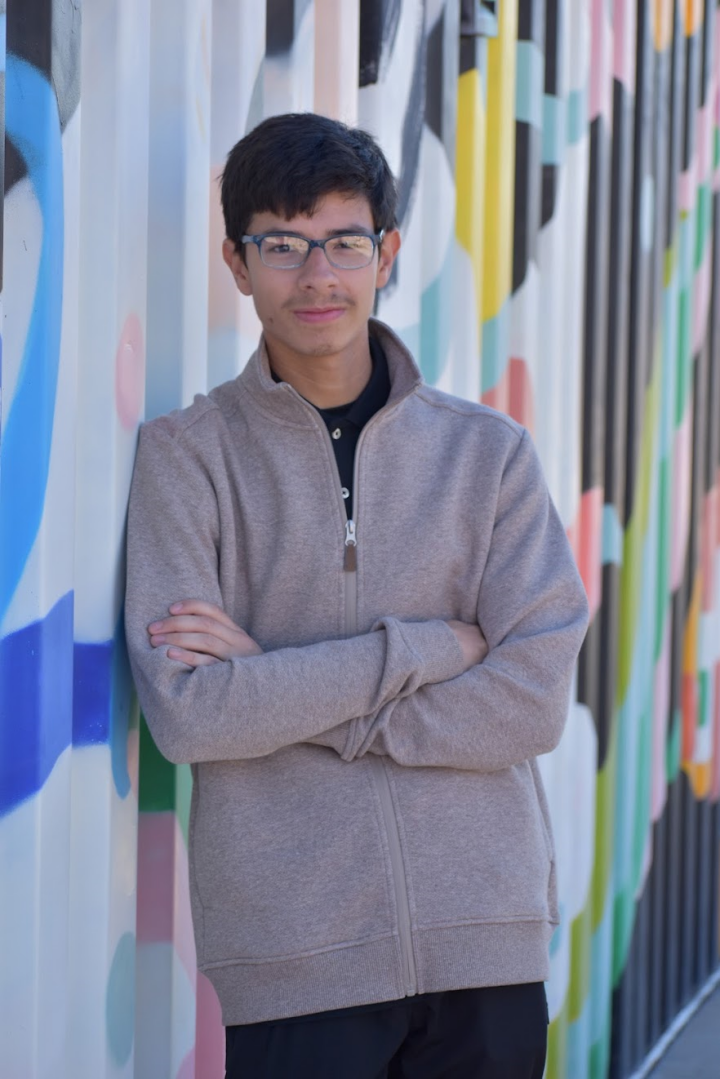
All images courtesy of the artist
At 19, Karuk artist Harrison Gage Spinks is already thinking beyond the page. A Tulsa native, Spinks has spent years drawing and developing a growing interest in digital media and animation. Currently studying at Tulsa Technology Center, he is learning to bring his artwork into motion while continuing to build the skills he hopes will take him into the animation industry.
Drawing has been part of Spinks’ life for as long as he can remember. His older brother, Garrett, is also an artist who loves to draw. When Harrison was little, he would sit beside him and draw too. That early experience helped spark an interest that has continued to grow. Today, pen and ink remain his favorite physical materials. Meanwhile, digital art and animation are giving him new ways to explore characters, movement, and storytelling.
“Harrison has rarely been without a sketchbook and pencil in hand,” says his mother, Keri Spinks-Bates. She has watched his love of drawing grow from a childhood constant into a serious pursuit. His dedication to illustration, character design, and animation, and his willingness to keep learning and experimenting is evident in the work he creates.
Images in Motion
Spinks names Japanese manga artist Hirohiko Araki as one of his biggest artistic influences. He is drawn not only to Araki’s distinctive visual style but also to his characters and storytelling. That combination of art and narrative is at the heart of Spinks’ own creative interests. He wants to create characters and stories that can eventually move beyond the sketchbook and reach a larger audience.
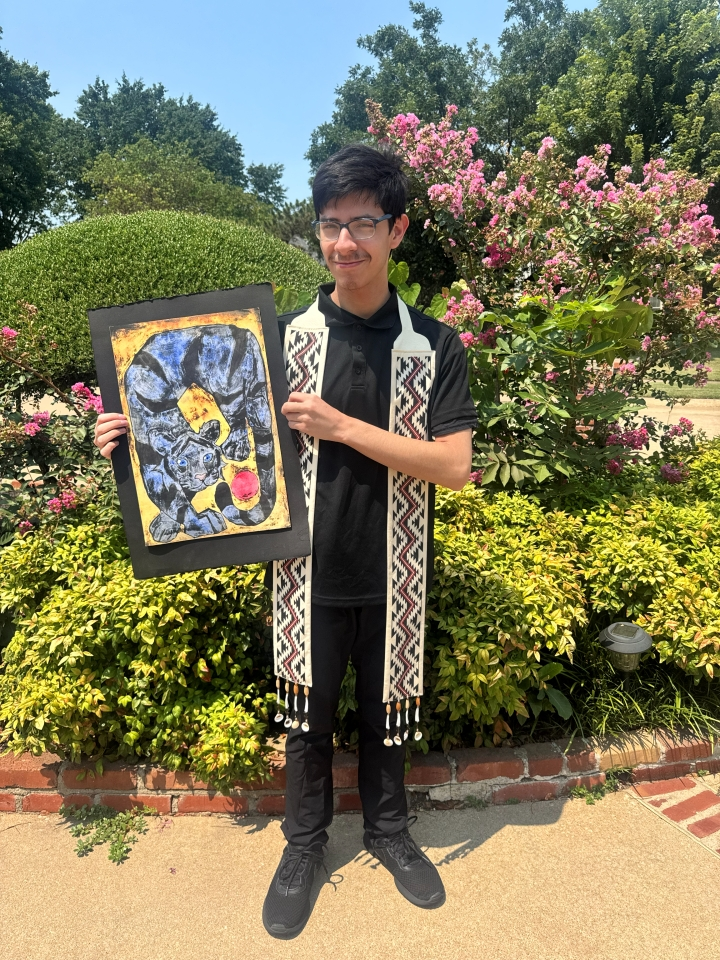
His 2025 piece Blue Tiger is one work that stands out to him. Spinks says the finished drawing turned out even better than what he had originally pictured in his head. For an artist, the experience of starting with an idea and finding the finished work become something more is part of the fun.
Support & Challenges
His artistic education has also taught him to look at the world differently. When he draws or animates people and animals, Spinks studies how their bodies are structured and how movement works. Understanding those details helps him recreate movement more accurately, but it also gives him a better understanding of how things actually work. That curiosity is something he carries into his creative process.
Spinks credits his high school art teachers with helping him develop his skills. Additionally, his family has provided encouragement from the beginning. His mother always encouraged her children to pursue their passions. Garrett, his brother, remains an important influence. One of Harrison’s pieces now hangs in his brother’s home. He notes, “I feel honored he loves my art.” Spinks also participated in the Union High School Art Show, giving him an early opportunity to see his work displayed publicly.
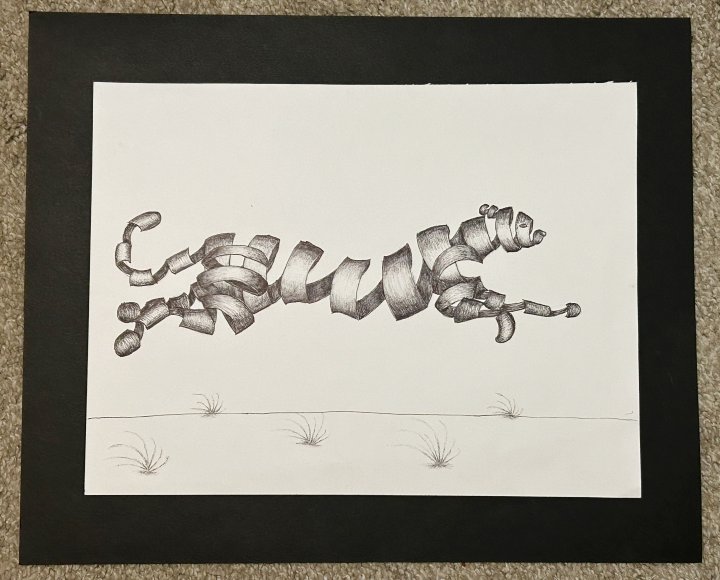
There is a practical challenge standing between Spinks and his long-term goals, though. There is not much of an animation industry in Oklahoma. He knows pursuing that career may eventually mean leaving his home state to find opportunities. However, he is already thinking about what he wants to do once he finds them. His goal is to bring some of the characters and stories he has created to life. He hopes to combine his interests in visual art, animation, character development, and storytelling.
Looking Forward
For Spinks, that future is also connected to his identity as a Native artist. His connection to Native art began at home. His paternal grandmother was the caretaker of the Ataloa Lodge museum at Bacone College in Muskogee, Oklahoma, so Native art was part of his world from an early age. Spinks’ mother, who is Portuguese-American, also made a deliberate effort to keep her children connected to their Native heritage, collecting Native art and children’s literature and making them part of their home. As a result, art was never something Spinks experienced only in a museum or gallery. It was simply part of his life.
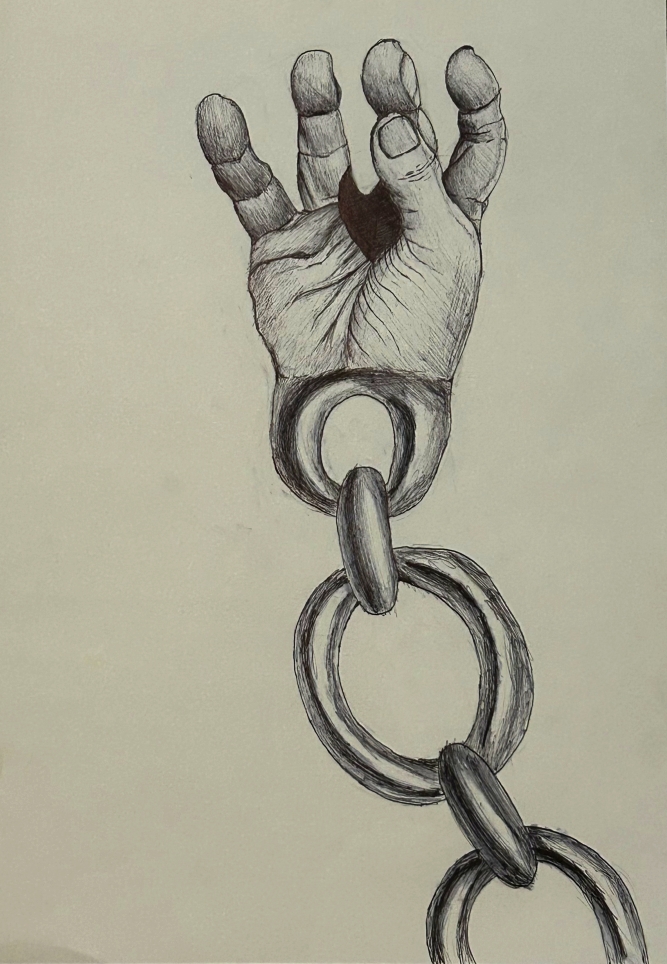
Now he wants to bring that connection forward in a new form. Spinks points to the limited number of animation studios focused on Native creators and Native stories and hopes to be part of changing that. He wants Native people to have more opportunities to tell their own stories and to see themselves represented in animation and other creative fields where Native voices remain underrepresented. His path may take him somewhere far from Oklahoma, but the stories he wants to tell will still be connected to home.
For now, Spinks’ advice to other young creators is straightforward: Start making things. “Even if it’s bad at first,” he says, “you learn from your mistakes, and you get better by continuing to create.”
He keeps a sketchpad with him almost everywhere in case inspiration strikes, and when he is at home, his desk is his favorite place to work. His approach is simple. Do what you love, keep creating, and see where it takes you. For a young artist looking toward animation, storytelling, and a future with more space for Native creators, that sounds like a pretty good place to start.
Rising Voices
To nominate a Native youth artist (under 21 years old) for Rising Voices, fill out our nomination form here.
Links
- Email Harrison
- Rising Voices, FAAM’s new print and web column celebrating Native youth artists
- Karuk Tribe
- Karuk People’s Center and Gift Shop, Happy Camp, CA
- Hirohiko Araki, IMDb